
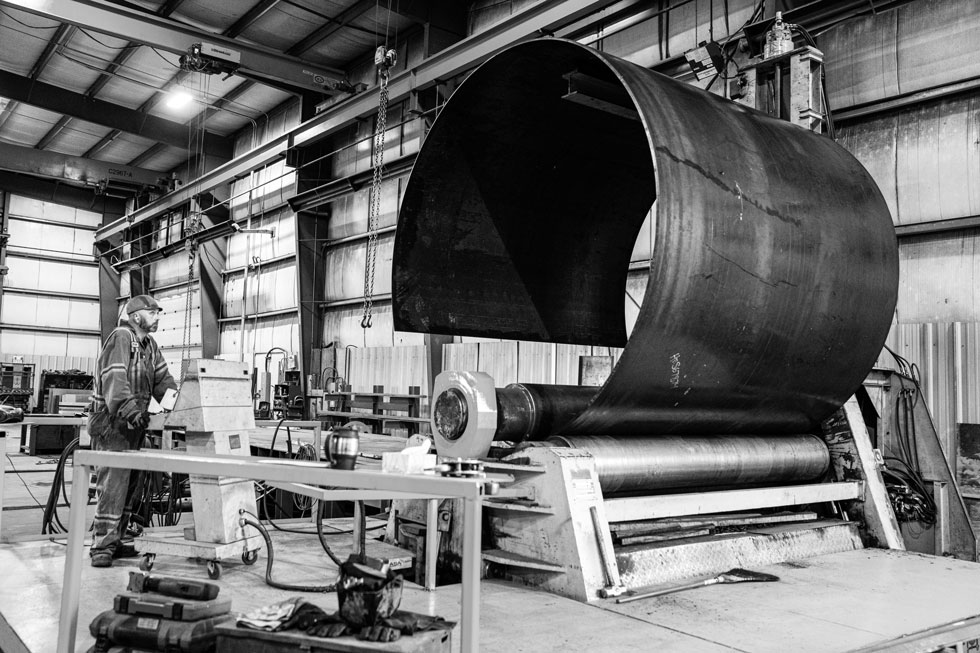
Plate rolls are for rolling plate into various curved shapes. The most common types of rolls are pyramid (3 rollers) or pinch rolls (4 rollers) and are available in various widths. Plate rolls are designated by the maximum thickness of plate combined with the maximum width of sheet. (ie: 1” thk. x 10’-0” wide). Thicker material can be rolled if the width of the plate is narrower. Plate rolls are used to form shells, saddles, cones and clamps.
Plate Rolls
- 10’-0” x 1” Mild steel thickness capacity
- 10’-0” x ½” Mild steel thickness capacity
- 6’-0” x 3/16” Mild steel thickness capacity
Structural Rolls
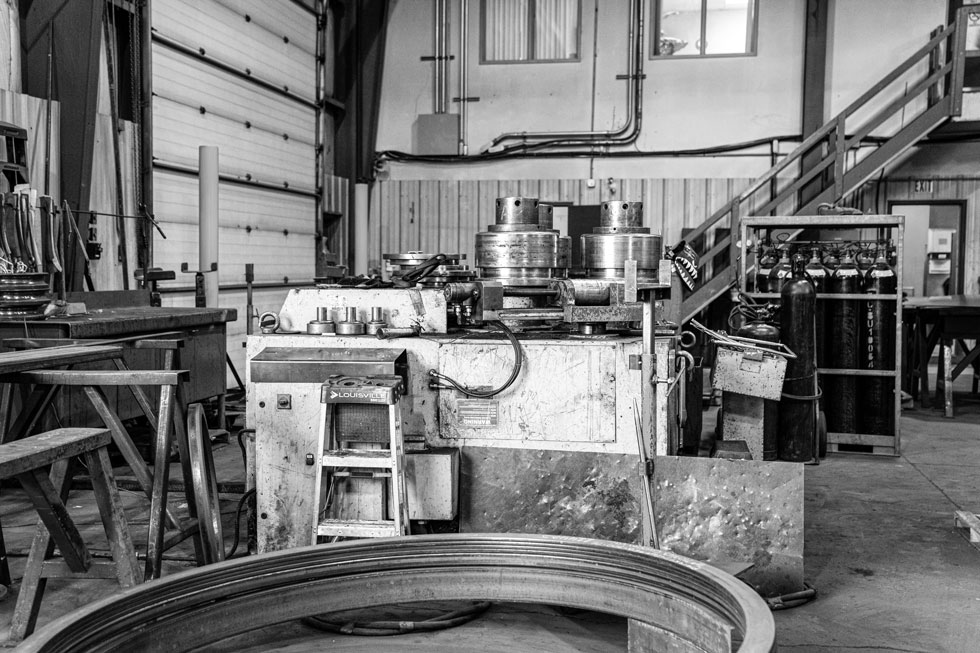
Structural rolls are used to form a variety of structural shapes such as channels, beam, angle iron, pipe, Hss tubing and flat bar. Generally speaking, the limitations on a large structural rolls is the amount of dies available. Rolling structural requires the knowledge of how each type of material reacts to the stretch and compression forces that occur. The tighter the inside radius – the more these factors come in to play. Some deformation can occur but minimizing this is a prime concern of our operators.